Dorcas: Faith in Action
She wasn't famous. She didn't lead armies or write Scripture. But when she died, the widows wept — showing Peter the robes and clothing she had made for them. Her faith was visible. Her love was practical. And God raised her.
Choose Your Experience
Dorcas: Faith in Action
The Hook
What if the measure of your life wasn't your accomplishments, your title, or your fame — but the garments left behind? When Dorcas died, the evidence of her life was tangible. Robes. Cloaks. Garments made for widows who couldn't afford them. She didn't leave a legacy of speeches. She left a legacy of stitches.
The Story
In the town of Joppa, there was a disciple named Tabitha (in Greek, Dorcas). Luke's description is brief but powerful: "She was always doing good and helping the poor" (Acts 9:36).
Then she became sick and died.
The believers heard that Peter was in a nearby town. They sent two men to urgently request his presence. When Peter arrived, he went upstairs to the room where Dorcas lay.
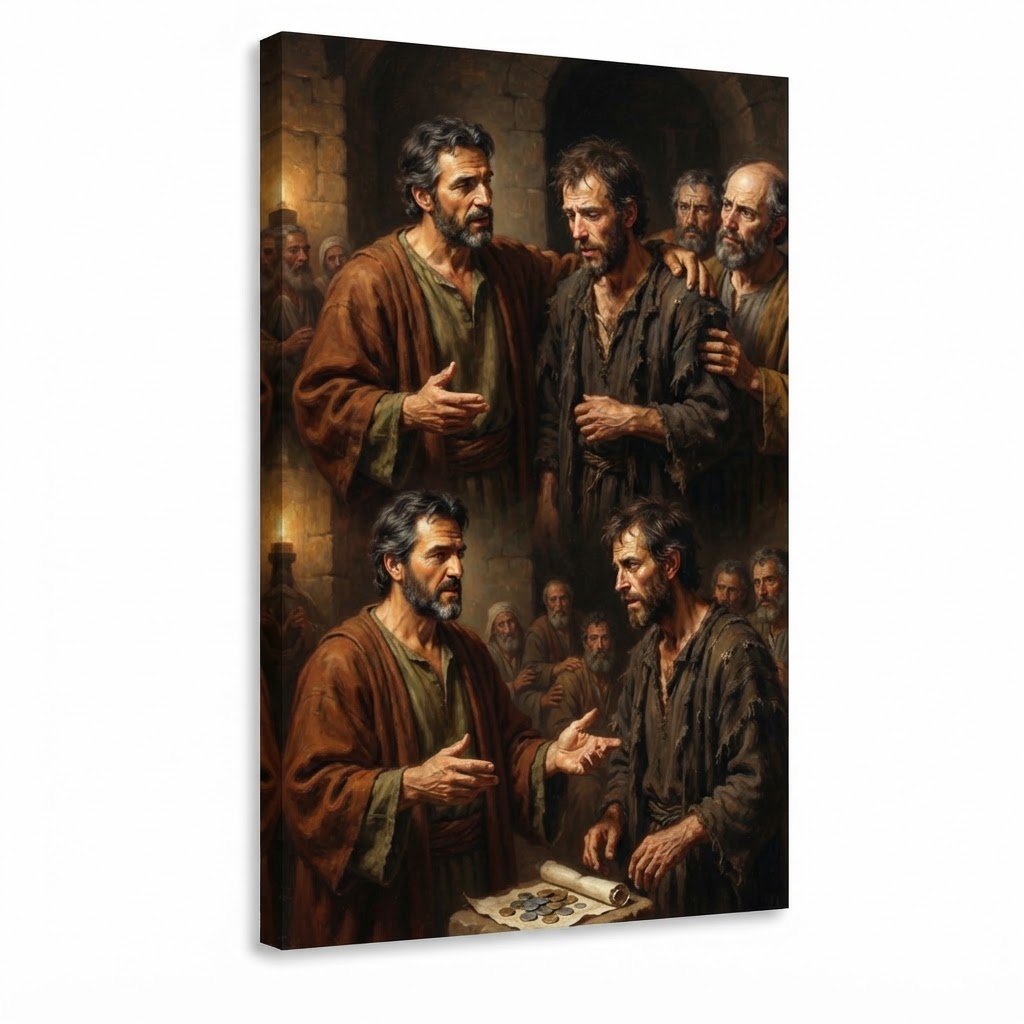
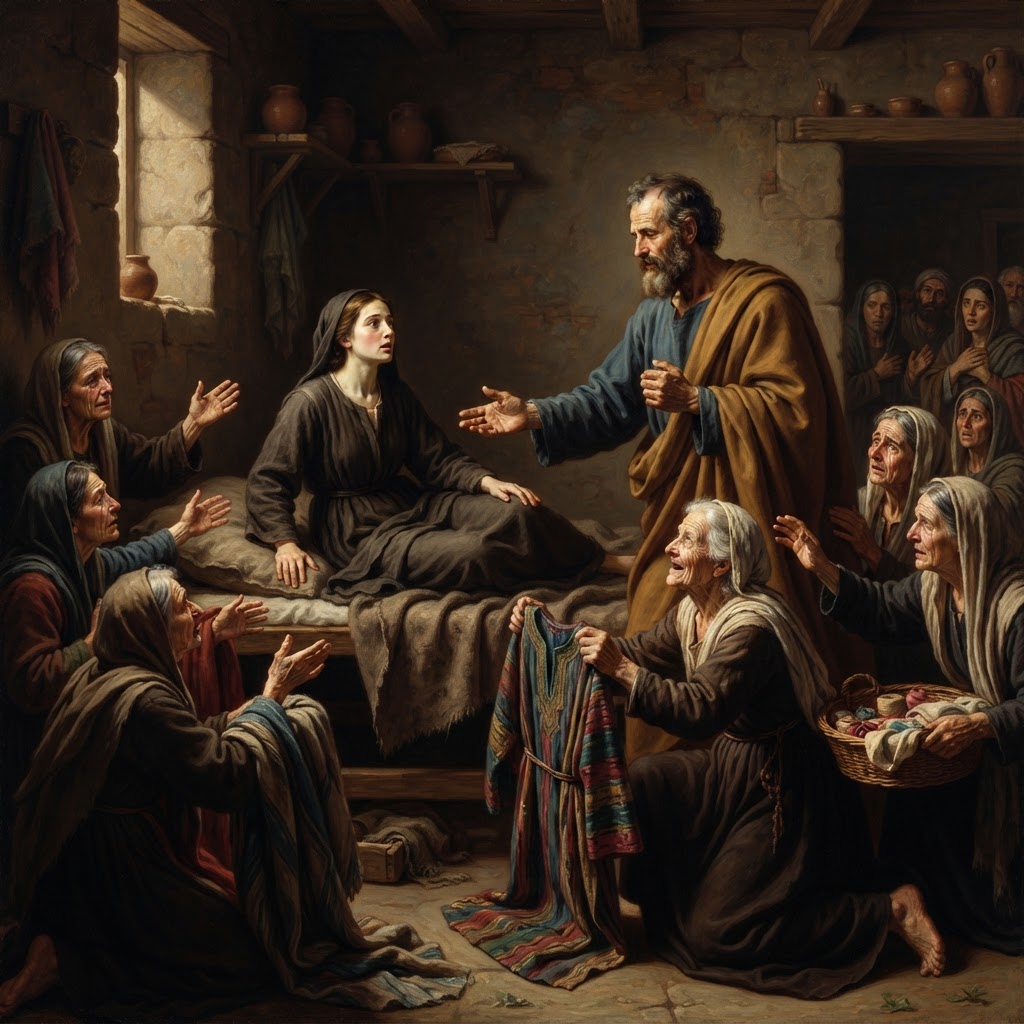
The widows were there, weeping. And they were showing Peter "the robes and other clothing that Dorcas had made while she was still with them" (Acts 9:39).
Picture the scene: garment after garment, held up by tearful widows. "She made this for me." "She made this for my children." "She made this when I had nothing."
Peter sent everyone out. He knelt. He prayed. Then he turned to the body and said: "Tabitha, get up."
She opened her eyes. Seeing Peter, she sat up. He took her hand and helped her to her feet. He called the believers and widows and presented her alive.
The result: "This became known all over Joppa, and many people believed in the Lord" (Acts 9:42). Her resurrection wasn't just for her — it was evangelism. An entire city heard about Jesus because of what God did through a seamstress.
The Lesson
1. Faith is visible. Dorcas's faith wasn't theoretical. It was fabric. You could touch it, wear it, see it. James would later write: "Show me your faith without deeds, and I will show you my faith by my deeds" (James 2:18). Dorcas's faith had stitches in it.
2. Ordinary skills become extraordinary ministry. Dorcas could sew. That was her skill. She didn't preach. She didn't heal. She sewed — and she used that skill to clothe the poor. God doesn't need you to be extraordinary. He needs you to use what you have for others.
3. Your impact is measured by what people show when you're gone. The widows didn't quote Dorcas's teaching. They showed her robes. What will people show when you're gone? What tangible evidence of your love will remain?
4. God can use your death to bring life. Dorcas's resurrection led many in Joppa to believe. But even before her resurrection, her life of service was already pointing to Jesus. The resurrection just amplified what her life had already declared.
Key Takeaways
- Faith that isn't visible isn't faith. If your faith doesn't produce action, it's not alive.
- Use your ordinary skills for God's purposes. Sewing, cooking, fixing, writing, organizing — whatever you can do, do it for others in Jesus' name.
- Your legacy is in the lives you've touched. Not in titles, but in tangible acts of love.
- Small acts of service can change a city. Dorcas's robes led to her resurrection, which led to a city turning to God.
Real-Life Application
- Audit your faith: What tangible evidence exists that your faith is alive? If someone examined your life, what "garments" would they find?
- Use your skill: What can you do? Cook? Fix? Write? Encourage? Use it — not for yourself, but for someone in need, in Jesus' name.
- Clothe someone: Find a practical need and fill it. Buy a coat for someone cold. Make a meal for someone hungry. Visit someone lonely.
- Think about legacy: What do you want people to show when you're gone? Start making it now.
Closing Prayer
Lord, make my faith visible. Not just in words, but in fabric — in tangible acts of love that people can touch, wear, and feel. Use my ordinary skills for Your extraordinary purposes. And when my time comes, let the evidence of my faith be the lives I've loved, not the things I've accumulated. Amen.
Memory Verse
"She was always doing good and helping the poor." — Acts 9:36
Next Episode
In Episode 6, the finale: The Samaritan Woman: Sharing Your Story — how one conversation with Jesus turned an outcast into an evangelist.
Key Takeaway
Faith that isn't visible isn't faith. Dorcas didn't just believe — she sewed. She didn't just pray — she clothed the poor. Her good works didn't save her, but they proved her faith was alive. And when she died, the evidence was overwhelming.
Family Discussion
1. Dorcas was known for 'always doing good and helping the poor.' What are you known for among the people in your life?
2. When Dorcas died, the widows showed the robes she'd made them. If you died today, what 'garments' would people show as evidence of your faith?
3. How is your faith visible in practical acts of love — not just words?
4. What is one practical act of service you can do this week that would show Christ's love to someone in need?
Quick Quiz
Sign in to test your knowledge and track your progress.
Sign In to Take Quiz