Peter: Failure Is Not the End
He swore he'd die for Jesus. Hours later, he denied he ever knew Him. But failure wasn't the end of Peter's story — it was the beginning of his transformation. Discover how Jesus restores the broken.
Choose Your Experience
Peter: Failure Is Not the End
The Hook
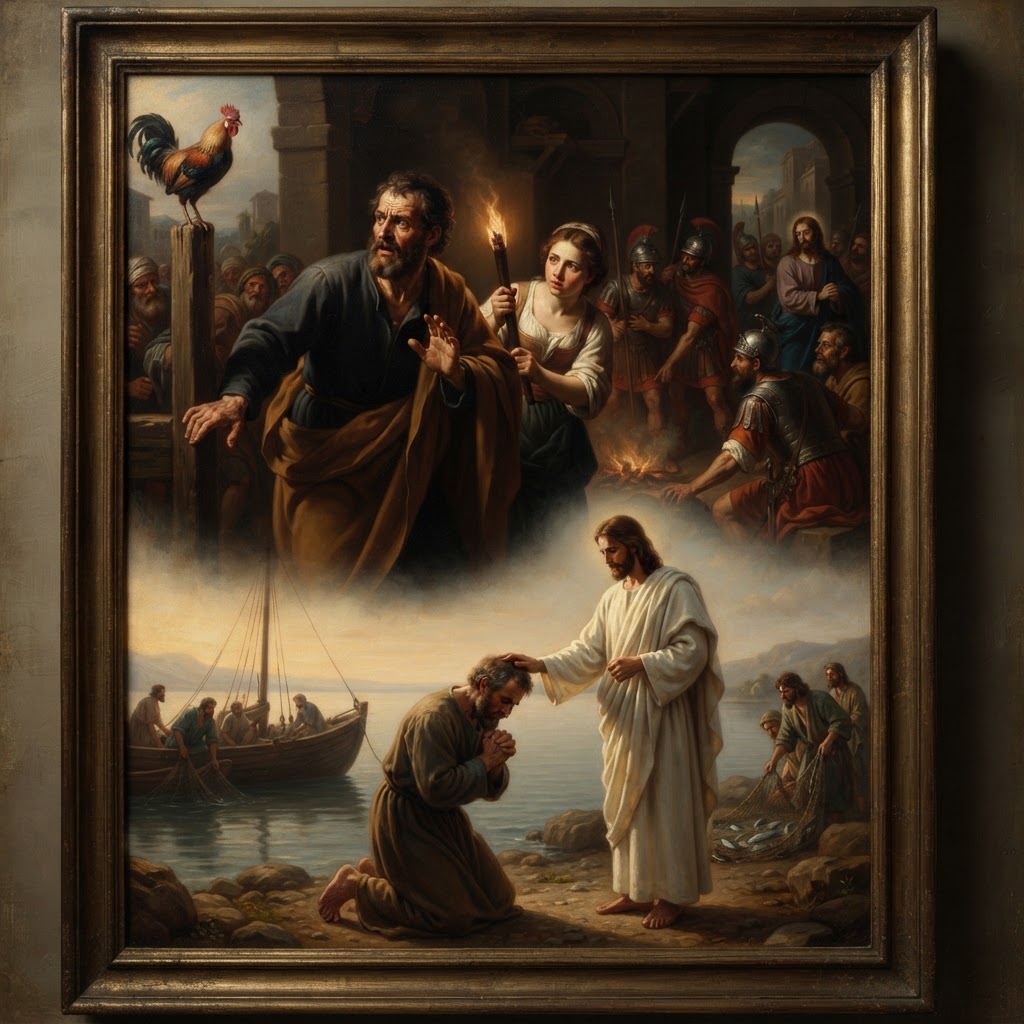
The last time Peter was near a fire, he was warming his hands and lying through his teeth. "I don't know the man." Three times. The rooster crowed. Jesus turned and looked at him. And Peter went out and wept bitterly.
The next time Peter was near a fire, Jesus was cooking breakfast on the beach. And this time, the conversation was different: "Do you love me?"
The Story
Peter was the loud one. The impulsive one. The one who walked on water — until he didn't. The one who drew his sword in Gethsemane. The one who swore, "Even if everyone else falls away, I never will. Even if I have to die with you, I will never disown you."
Hours later, Jesus was arrested. Peter followed at a distance. He sat by a fire in the high priest's courtyard. A servant girl recognized him. "You were with Jesus of Nazareth."
Peter denied it. "I don't know what you're talking about."
Again, someone said, "This fellow was with Jesus." Peter denied it with an oath: "I don't know the man!"
A third time. "Surely you are one of them — your Galilean accent gives you away." Peter began to call down curses: "I don't know the man!"
The rooster crowed. Jesus, being led past, turned and looked straight at Peter. Peter remembered Jesus' words: "Before the rooster crows today, you will disown me three times."
Peter went out and wept bitterly. The Greek word for "bitterly" means violent, convulsive weeping. This was the worst moment of Peter's life.
The Restoration:
After the resurrection, Jesus met the disciples on the beach. He cooked breakfast. After they ate, Jesus turned to Peter:
"Simon son of John, do you love me more than these?"
"Yes, Lord, you know that I love you."
"Feed my lambs."
Again: "Simon son of John, do you love me?"
"Yes, Lord, you know that I love you."
"Take care of my sheep."
A third time: "Simon son of John, do you love me?"
Peter was hurt — three questions for three denials. "Lord, you know all things. You know that I love you."
"Feed my sheep."
Then Jesus told Peter how he would die — crucified, just as he'd once promised. But this time, Peter would keep his word. Jesus said: "Follow me."
Fifty days later, Peter stood up at Pentecost, filled with the Holy Spirit, and preached to thousands. Three thousand were saved. The denier became the proclaimer. The failure became the leader.
The Lesson
1. Failure is real, but it's not final. Peter's denial was a genuine failure. He didn't just stumble — he collapsed. But Jesus didn't define Peter by his worst moment. He defined Peter by his future calling.
2. Jesus' restoration is thorough. Three denials, three questions. Jesus didn't gloss over the failure — He addressed each one. But His questions weren't "Why did you do it?" They were "Do you love me?" The issue isn't your past performance — it's your present love.
3. Restoration leads to reassignment. Jesus didn't just forgive Peter — He recommissioned him. "Feed my sheep." Failure doesn't take you out of ministry. God's grace puts you back in.
4. The same fire that exposed Peter's failure also hosted his restoration. The first fire was the fire of denial. The second fire was the fire of restoration. God can use the very circumstances of your failure to bring about your healing.
Key Takeaways
- Your worst moment doesn't define your future. Peter's denial could have been the end. Instead, it was the setup for Pentecost.
- Jesus asks for love, not explanations. He didn't ask Peter to justify his denial. He asked for his heart.
- Restoration includes purpose. Jesus didn't just forgive Peter — He gave him a job. Grace always leads to calling.
- The same mouth that denied Jesus can preach His gospel. Peter's story proves that God specializes in redeeming failures.
Real-Life Application
- If you've failed: Don't hide. Bring your failure to Jesus. He's cooking breakfast on the beach, waiting for you.
- If someone you know has failed: Don't define them by their worst moment. Jesus didn't. Neither should you.
- If you're leading others: Remember Peter. The man who failed most publicly was called to feed the sheep. Your brokenness can become your greatest qualification.
Closing Prayer
Lord, thank You that failure is not the end. Thank You that You didn't define Peter by his denials — and You don't define me by mine. When I fall, draw me back to the fire of Your presence. Ask me again: "Do you love me?" And let my answer be not just words, but a life of feeding Your sheep. Amen.
Memory Verse
"Jesus said, 'Feed my sheep.'" — John 21:17
Next Episode
In Episode 5, we explore Paul: A Life Transformed — the persecutor who became the apostle.
Key Takeaway
Failure is not final in God's economy. The same mouth that denied Jesus became the mouth that preached at Pentecost. Your failure is not the end — it's the setup for your restoration.
Family Discussion
1. Peter denied Jesus three times. Have you ever denied knowing Jesus — through words, actions, or silence? What happened?
2. Jesus didn't ask Peter 'Why did you fail?' He asked 'Do you love me?' Why is that the question that matters?
3. What does it look like to be restored after failure? Is there a failure you need to bring to Jesus?
4. How does Peter's story change the way you view people who have failed spiritually?
Quick Quiz
Sign in to test your knowledge and track your progress.
Sign In to Take Quiz